The aerospace industry follows strict quality and safety requirements. Even small quality issues can have serious consequences. Therefore, organizations need strong quality systems and skilled internal auditors.
AS 9100 provides a quality management framework for aerospace and defense organizations. It includes additional requirements for risk, traceability, configuration management, and operational control.
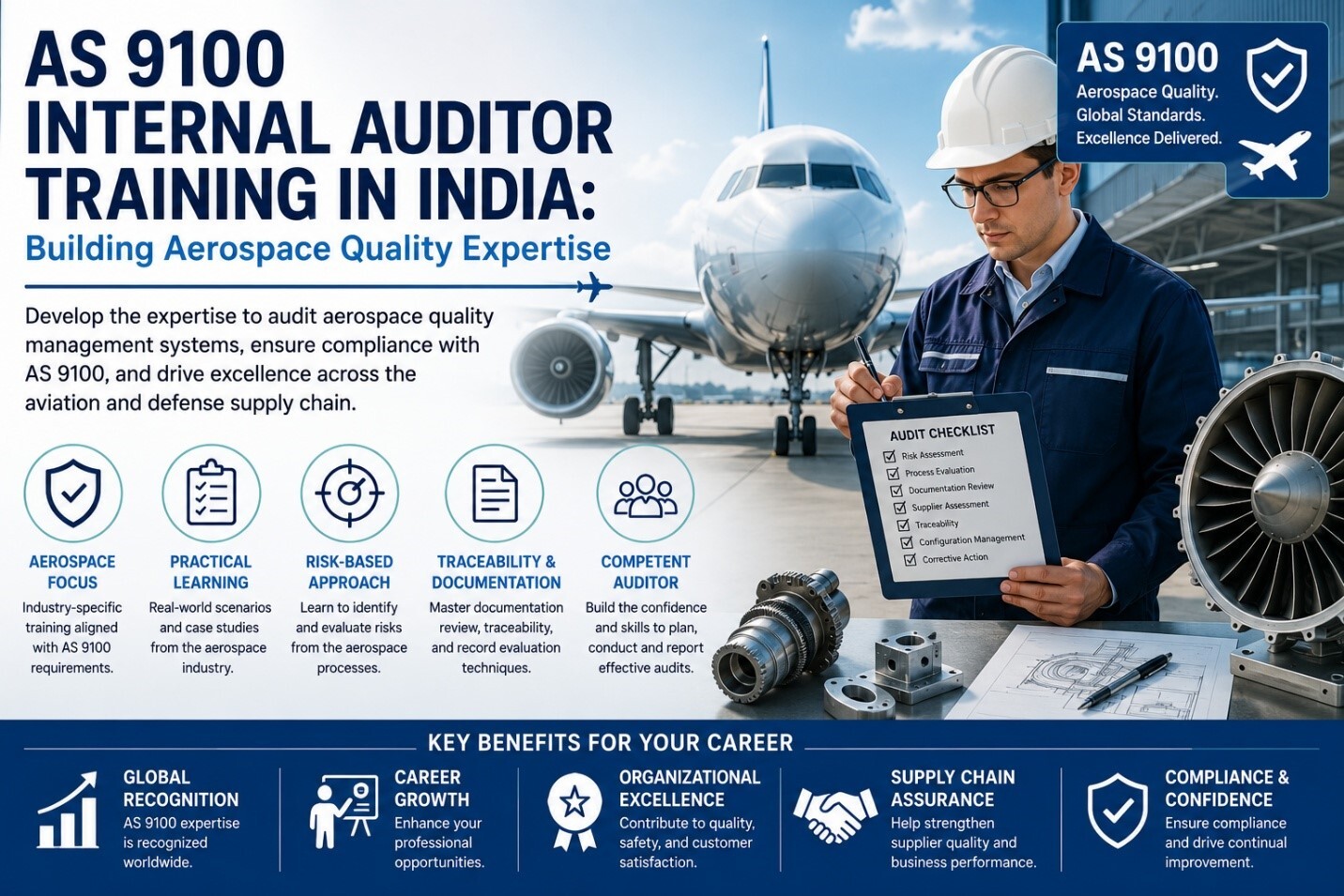
AS 9100 internal auditor training in India helps professionals understand these requirements. It also develops practical skills for planning and conducting internal audits.
This guide explains what the training involves. It also highlights the skills professionals can develop through this specialized program.
Why the Aerospace Sector Demands Specialized Attention
The High Cost of Undetected Nonconformities
Aerospace products often have strict safety requirements. A quality failure can affect product performance, reliability, or safety.
Therefore, organizations need effective methods to identify problems early. Internal audits provide one way to find weaknesses before they become larger issues.
Auditors review processes, records, and controls. They also verify whether actual practices match documented requirements.
A Complex, Multi-Tiered Supply Chain
Aerospace manufacturing often involves many suppliers. Each supplier can contribute materials, components, or specialized services.
This creates additional quality risks. Poor controls at one stage can affect later production activities.
Internal auditors therefore need to understand supply chain processes. They must also evaluate how organizations monitor supplier performance.
Understanding AS 9100 and Its Purpose
Built on a Quality Management Foundation
AS 9100 builds on established quality management principles. However, it adds requirements for aerospace and defense applications.
The standard focuses on consistent processes and continual improvement. It also considers the specific risks found in aerospace operations.
Professionals need to understand both the general principles and aerospace-specific requirements.
Why Aerospace Requires Additional Rigor
Aerospace organizations deal with safety-critical products and processes. Therefore, quality controls need to be highly reliable.
AS 9100 gives particular attention to risk management and product safety. Traceability and configuration management are also important areas.
These requirements help organizations maintain control throughout the product lifecycle.
What Makes This Internal Auditor Training Distinct
Industry-Specific Context and Examples
General audit principles provide a useful foundation. However, aerospace auditors also need industry-specific knowledge.
Strong training programs use aerospace-related examples and scenarios. These examples help participants understand how audit methods apply in real situations.
Practical scenarios can also improve decision-making skills. Participants can learn how to evaluate aerospace processes more confidently.
Emphasis on Traceability and Documentation
Traceability is important in aerospace manufacturing. Organizations need reliable records that show the history of products and processes.
Auditors therefore need strong documentation review skills. They must verify whether records provide suitable evidence.
Training helps participants compare documents with actual practices. This can reveal gaps that may otherwise remain unnoticed.
Core Skills Built Through This Training
Auditing With Risk Awareness
Risk-based thinking is important during aerospace audits. Auditors need to understand which processes may have greater consequences.
Training helps participants identify these areas. They can then focus audit activities where they are most valuable.
This approach also helps auditors use limited time effectively.
Evaluating Configuration Management
Configuration management helps organizations control approved product and process information. Changes must be managed carefully.
Auditors learn how to evaluate configuration controls. They may review approvals, revisions, records, and change processes.
The goal is to confirm that products remain aligned with approved requirements.
Conducting Thorough Documentation Reviews
Documentation provides important audit evidence. However, auditors should not assume that complete paperwork means effective processes.
Participants learn to review records critically. They compare documentation with actual activities and other available evidence.
This approach supports accurate and objective findings.
Evaluating First Article Inspection Practices
First Article Inspection is an important aerospace quality activity. It helps verify that production processes can meet approved requirements.
Training can introduce participants to the purpose of FAI activities. Auditors can then assess related processes and records.
This provides another way to verify production readiness and consistency.
Pursuing AS 9100 internal auditor training in India can help professionals develop specialized audit knowledge. The training can also support stronger quality practices within aerospace and defense organizations.
How This Training Typically Progresses
Building Foundational Audit Skills
Training usually starts with basic audit concepts. Participants learn about audit planning, scope, evidence, and reporting.
These fundamentals create a strong foundation. They also make it easier to understand more specialized aerospace requirements.
Progressing Toward Aerospace Applications
The training can then move toward aerospace-specific topics. Participants apply audit principles to realistic industry scenarios.
They may review documentation or evaluate process controls. Practical exercises help connect theory with workplace situations.
Why This Training Matters for Career Development
Building Specialized Expertise
AS 9100 auditing requires knowledge beyond general quality management. Professionals who develop this expertise can build a more specialized skill set.
This can be useful for people already working in aerospace quality. It can also help professionals planning to enter the sector.
Supporting Career Growth
Internal auditing can provide experience across different organizational processes. Auditors often work with production, engineering, procurement, and quality teams.
This broader exposure can strengthen professional knowledge. Over time, it may support progression into more senior quality roles.
Who Typically Pursues This Training?
Quality Professionals in Aerospace Organizations
Quality professionals can use the training to strengthen their aerospace knowledge. It can also help them conduct internal audits more effectively.
Auditors Expanding Into Aerospace
Professionals with general auditing experience may want to enter the aerospace sector. AS 9100 training can help them understand industry-specific requirements.
This can broaden their professional opportunities.
Program and Project Managers
Program managers may also benefit from understanding AS 9100 requirements. They can use this knowledge to better understand quality expectations.
The training can also improve communication with quality and engineering teams.
What Strong Programs Typically Include
Realistic Industry Case Studies
Practical case studies can make training more engaging. They allow participants to examine situations that resemble actual aerospace operations.
Good examples may cover supplier issues, documentation gaps, process changes, or product risks.
Practical Documentation Exercises
Documentation review should be an important part of training. Participants need opportunities to examine records and identify potential issues.
Practical exercises can improve their ability to recognize missing or inconsistent evidence.
Experienced Instructors
Instructor experience can affect the value of training. Professionals with relevant aerospace experience can provide useful industry context.
They can also explain how audit principles work in real organizations. This can make technical topics easier to understand.
Preparing Yourself Before Enrollment
Review Aerospace Quality Fundamentals
Basic preparation can make the training easier to follow. Review topics such as quality management, risk, traceability, and process control.
This gives you a useful foundation before the course begins.
Gather Relevant Workplace Examples
Think about quality processes within your organization. Consider examples involving suppliers, documentation, production, or corrective action.
These examples can help you connect training topics with daily responsibilities.
Common Questions About This Training
Is Prior Aerospace Experience Required?
Prior aerospace experience can be helpful. However, it is not always essential.
A well-structured program should introduce the necessary aerospace context. It should also explain the audit principles clearly.
How Does It Differ From General Auditor Training?
The main difference is the aerospace focus. AS 9100 training addresses specific risks and controls found in aerospace and defense.
Topics such as traceability and configuration management receive particular attention. These areas are less prominent in general quality auditing.
Is It Relevant for Suppliers?
Yes. Aerospace suppliers are an important part of the industry supply chain.
Supplier organizations must also maintain effective quality controls. Therefore, AS 9100 audit knowledge can be valuable for supplier quality professionals.
Does It Cover Defense Considerations?
AS 9100 is relevant to aerospace and defense organizations. Training may therefore include examples from both sectors.
However, specific contractual or regulatory requirements can vary. Professionals should understand the requirements that apply to their particular organization.
Bringing It All Together
AS 9100 internal auditor training in India can help professionals build specialized aerospace quality expertise. The training combines general audit principles with industry-specific requirements.
Participants can develop skills in audit planning and evidence evaluation. They can also learn about traceability, configuration management, supplier controls, and documentation.
These skills can support professionals working in aerospace and defense organizations. They can also help quality professionals expand into this specialized industry.
However, training is only the beginning. Regular audit practice can strengthen confidence and practical judgment.
For professionals seeking a career in aerospace quality, AS 9100 internal auditor training can provide a valuable foundation. Continued learning and workplace experience can then help turn that foundation into long-term professional expertise